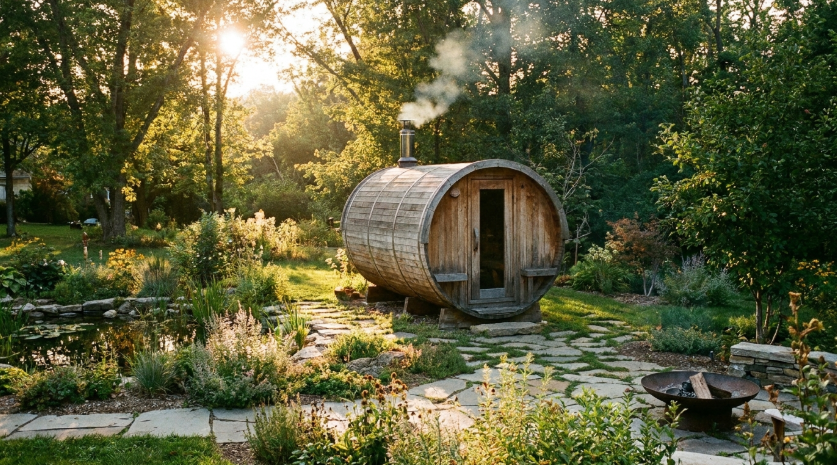
Electric vs Wood Heat for a Barrel Sauna: Cost Breakdown

An electric heater is usually the cheaper overall choice for a barrel sauna once installation is factored in, mainly because it needs only a dedicated circuit rather than a chimney, flue, and roof penetration. A wood-burning stove can have a similar or lower sticker price for the unit itself, but chimney installation, cordwood costs, and extra maintenance typically make it the more expensive option over a five-year period, especially in a small yard where chimney clearance is harder to work around.
Upfront Cost: Electric Heater vs Wood-Burning Stove
An electric heater sized for a 6-person barrel typically runs $600 to $1,800 depending on kilowatt rating and whether it includes a built-in control panel. A comparable wood-burning stove built for sauna use often lands in a similar $500 to $1,600 range for the unit alone. On paper the two look close, which is why most of the real cost difference shows up in the next step rather than the sticker price of the heater itself.
Installation Cost: Electrical Circuit vs Chimney and Venting
An electric heater above roughly 6 kilowatts needs a dedicated 240-volt circuit, which can cost anywhere from a few hundred dollars for a short run close to the panel to over $2,000 for a longer trenched run to a detached backyard structure. A wood-burning stove needs a proper flue with a roof or wall penetration built to code clearances from combustible materials, which is specialized labor that commonly runs $1,000 to $2,500 depending on the roofline and local permitting requirements. In a small yard, the chimney also has to clear nearby structures and the roofline itself, which can rule out certain placements entirely.
Fuel Cost Per Session: Electricity vs Cordwood
A 6-kilowatt electric heater running for 45 minutes to an hour costs roughly $0.75 to $1.50 per session at typical residential electricity rates, which adds up to $15 to $40 a month for regular use. A wood-burning stove uses roughly half a bundle to a full bundle of seasoned cordwood per session depending on outdoor temperature and how long the sauna runs, which can cost $2 to $6 per session at typical firewood prices, more if wood has to be purchased rather than sourced from the property. Over a season of frequent use, that difference compounds into a noticeable gap in favor of electric heat.
Space Requirements: Why Wood Heat Costs More in a Small Yard
Beyond the chimney itself, a wood-burning setup needs a dry, accessible spot to store cordwood near the sauna, which is easy to overlook when measuring a small footprint. That storage space competes with the walking clearance and drainage margin a barrel sauna already needs around its base. An electric heater sidesteps this entirely, since the only extra requirement is the cable run from the panel, which can often be routed underground or along a fence line without taking up usable yard space.
Maintenance Cost Over Time
Electric heaters mainly need rock replacement every one to two years, typically a modest cost, plus standard electrical inspection if required locally. Wood-burning stoves need periodic chimney sweeping to clear creosote buildup, roughly once a year for regular use, along with ash removal and stove-specific upkeep that electric setups skip entirely. Chimney sweeping alone commonly runs $150 to $300 per visit depending on the region, a recurring cost that has no electric equivalent.
Insurance and Permit Cost Differences
Many homeowner insurance policies ask about wood-burning appliances specifically, and some require proof of a code-compliant installation or an inspection before covering a structure that includes one. Electric heaters rarely trigger the same scrutiny, though the dedicated circuit itself may still need a permit and inspection depending on the jurisdiction. Either way, checking with an insurance provider before installation avoids a coverage gap discovered only after a claim.
Total Cost Comparison Over Five Years
Adding unit price, installation, fuel or electricity, and maintenance together over five years of regular use, an electric setup commonly lands a few thousand dollars below a comparable wood-burning setup once chimney installation and cordwood are factored in, though the exact gap depends heavily on local electricity rates and firewood cost. Buyers weighing both heat types against a specific 6-person model’s specs can compare current heater options in the SweatDecks catalog alongside other outdoor sauna retailers before finalizing a budget.
Availability and Practical Fit for a Small Yard
Cordwood availability varies a lot by region. A rural buyer with a woodlot or a nearby supplier may pay closer to the low end of the fuel range, while someone in a dense suburb without a good firewood source could be paying city prices for delivered bundles all winter, which narrows the gap with electric or erases it entirely. Electric power, by contrast, is available at a consistent local rate regardless of where the property sits, which makes budgeting more predictable from one season to the next. For a small yard specifically, the chimney’s need for vertical clearance above the roofline can also rule out placements that would otherwise work fine for an electric heater, since the flue has to clear nearby structures and meet code setbacks from anything combustible. Weighing all of this together, wood heat still appeals to buyers who value the ritual of tending a stove and already have a reliable, affordable wood source, while electric heat tends to be the more practical and lower-cost choice for a tight residential lot with average heating needs.
What the Research Says About Heat Source and Health Benefit
Most of the published research on regular sauna bathing, including the large Finnish cohort studies frequently cited in this space, was conducted using traditional heat sources rather than distinguishing between electric and wood-burning stoves specifically. A review in Mayo Clinic Proceedings summarizing this body of evidence found associations between regular use and lower cardiovascular event rates without differentiating by heater type, and an earlier review of sauna benefits and risks reached a similar conclusion. In practical terms, the heat source itself does not appear to change the associated health outcomes; frequency of use is the more consistently studied factor.
Frequently Asked Questions
Is an electric or wood-burning heater cheaper for a barrel sauna? Electric is usually cheaper overall once installation is included, mainly by skipping chimney and roof penetration costs.
How much does it cost to run an electric barrel sauna heater per session? Roughly $0.75 to $1.50 per session at average residential electricity rates for a typical 6-kilowatt heater.
Does a wood-burning barrel sauna need a chimney? Yes, a proper flue and roof or wall penetration built to code clearances, which adds material and labor cost.
Is a wood-burning barrel sauna harder to fit in a small yard? Somewhat. The chimney needs vertical clearance and cordwood needs dry storage nearby, both using space an electric setup does not need.
Which heat source needs more ongoing maintenance? Wood-burning stoves generally need more upkeep, including chimney sweeping and ash removal.
References
- Cardiovascular and Other Health Benefits of Sauna Bathing: A Review of the Evidence, Mayo Clinic Proceedings, 2018
- Benefits and risks of sauna bathing, The American Journal of Medicine, 2001
- Clinical Effects of Regular Dry Sauna Bathing: A Systematic Review, Evidence-Based Complementary and Alternative Medicine, 2018
By Halley Sorenson